By Ishaya Malgwi
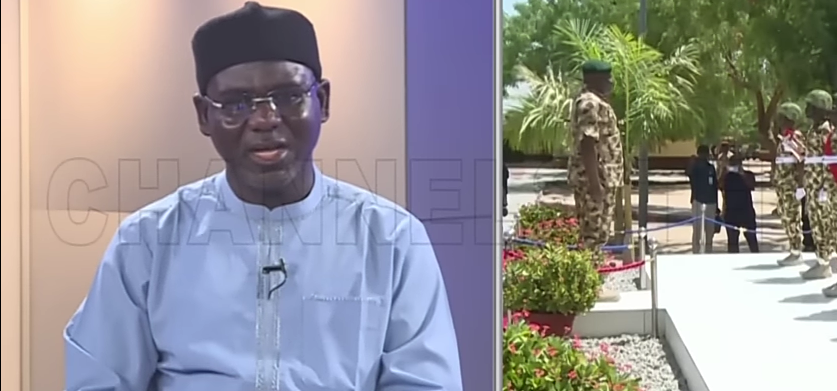
On Friday, March 20, 2026, the nation watched and listened intently as His Excellency, General Tukur Yusuf Buratai, CFR, former Chief of Army Staff, former Ambassador to the Benin Republic, and the Betara of Biu, sat across from Seun Akinbaloye on Channels Television’s Politics Today. Given his critical role as Army Chief during the period Boko Haram was declared “technically defeated,” his insights were not just anticipated; they were historic.
True to form, the General was frank and direct. Yet, within that candor lay a seismic disclosure—one that confirmed the darkest suspicions long held in the shadows of Nigeria’s decade-long war on terror.
The high point, the moment that froze viewers in their tracks, was General Buratai’s revelation that the government knew the financiers of the Boko Haram insurgency. Furthermore, he stated it was the government that introduced the deradicalization and rehabilitation program for captured Boko Haram militants.
For the people of Borno State and the wider North-East, these were not new theories. For years, amidst the funerals and the fear, a painful narrative has circulated in whispers and hushed conversations: that the true enablers of their suffering were not just the faceless terrorists in the bush but individuals known to the corridors of power. What was missing was the courage — or the credible platform — to say it aloud. That courage, stunningly, came from a former insider, a man who commanded troops, a three-star General now lifting the veil.
With these stark admissions, the puzzle pieces, long scattered by propaganda and opaque official statements, clicked into a disturbing picture. Nigerians now have it from the highest military authority: the enablers of the insurgency were known. The logical, chilling deduction is that the failure to act decisively against these financiers implicates either the Federal Government, the Borno State Government, or both.
The refusal to publicly name, shame, and prosecute these financiers, while simultaneously championing the rehabilitation of their foot soldiers, is more than a policy contradiction; it is a damning indictment. It suggests a grotesque calculus where ending the insurgency was never the true objective. Instead, it points to a sustained enterprise of violence, where the blood of citizens became a currency for political and economic gains yet to be fully uncovered.
The revelation reshapes the entire conflict. The people of Borno State now see clearly: the immediate agents of their suffering may be the poorly trained militants in Sambisa, but the architects — the sustainers of this economy of death — are those in authority who know the source of terror but choose to look away. Every bombed market, every abducted schoolgirl, every overrun village traces back to this conspiracy of silence.
This raises the most haunting question, one now echoing across the scorched plains of the North-East: What have the poor citizens of Borno State done to their government leaders to deserve this wickedness? What crime justifies being knowingly sacrificed at the altar of unnamed interests?
General Buratai’s interview was not just a media appearance; it was a moment of brutal truth-telling. The revelations were stark. They have shifted the burden of guilt from the shadows into the light of public scrutiny. The Nigerian state now stands accused not merely of failing to protect its citizens but of being a conscious accomplice in their prolonged torment. The demand for answers, for names, and for ultimate justice has just been legitimized by one of the war’s foremost commanders. The nation can no longer pretend it does not know.