By Engr Chiamaka Nnadigwe
Nigeria’s oil revenue machine suddenly roared louder in March. The Nigerian National Petroleum Company Limited reportedly remitted N2.88 trillion into the Federation Account, a massive jump from February’s N1.80 trillion. That is roughly a 60 percent increase in just one month.
At first glance, it looks like Nigeria’s oil sector may finally be regaining financial strength. But the dramatic rise was not necessarily because Nigeria suddenly discovered more oil, exported more crude, or transformed operational efficiency overnight.
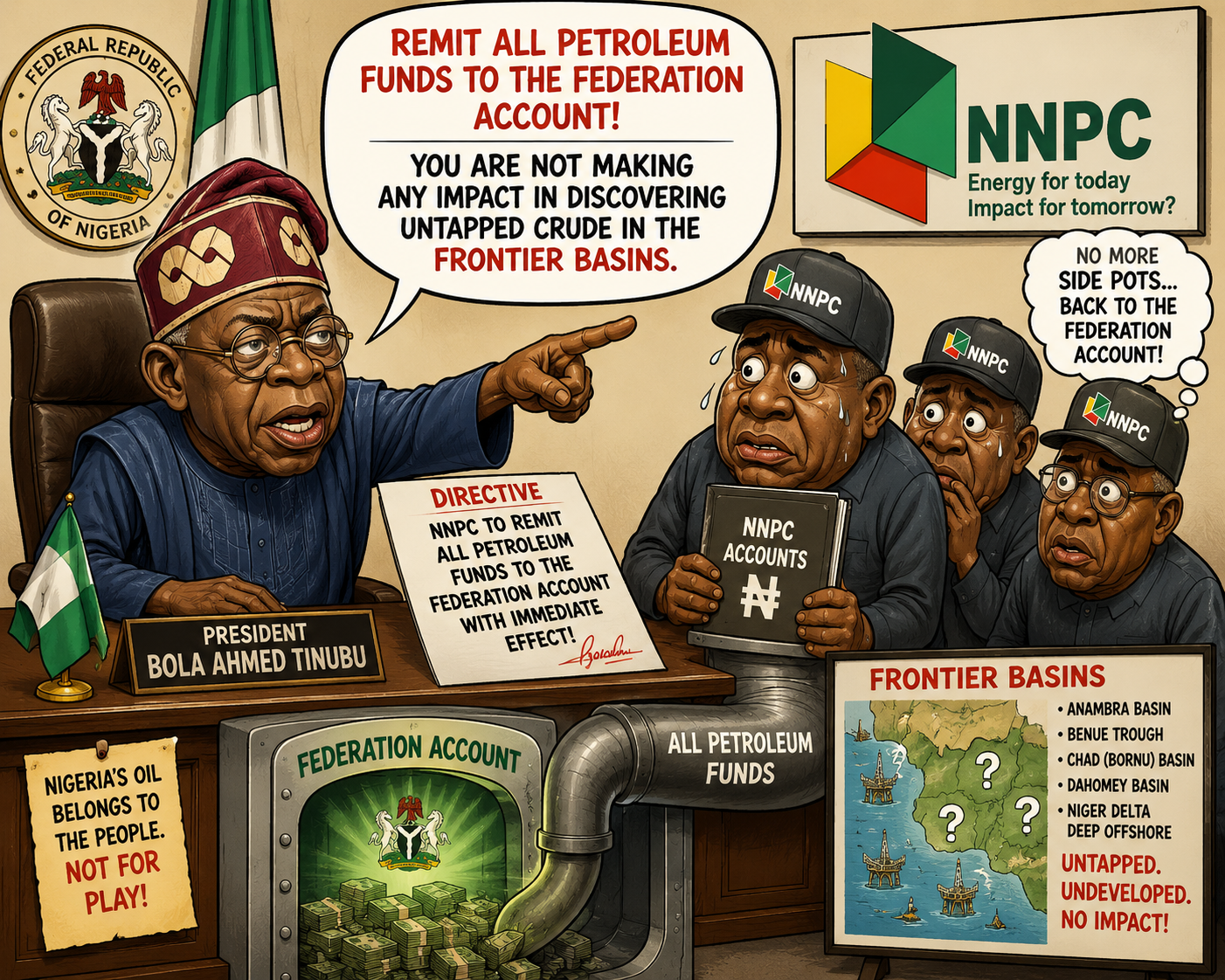
The real catalyst was policy.: More specifically, Executive Order No. 9 signed by President Bola Ahmed Tinubu.The order effectively stopped the automatic deduction of two major revenue allocations previously retained by NNPC:
1. The 30 percent Frontier Exploration Fund deduction,
2. And another 30 percent management fee retention.
Once those deductions were removed or reduced, far more revenue flowed directly into the Federation Account.
In simple terms:
Nigeria did not suddenly earn dramatically more money.
Nigeria simply kept more of the money that was already being generated. And that raises an important national question:
If we are now retaining more oil profits centrally, should we not also be aggressively increasing the profits themselves? Because eventually, you cannot cut deductions forever. At some point, the system must produce bigger underlying revenues.
Let’s Simplify the Old Model: Before this executive order, NNPC operated with a controversial revenue-sharing structure.JustImagine NNPC earns N100 from oil operations.Before sending money to the Federation Account, it could legally deduct:30 percent for frontier basin exploration, 30 percent as management and operational retention, plus other costs and obligations.So the federal purse often received far less than the headline oil revenues Nigerians imagined.
What Was the Frontier Exploration Fund? The Frontier Exploration Fund was designed to finance oil exploration in frontier basins areas believed to contain untapped hydrocarbon reserves.These include regions like: the Chad Basin, Sokoto Basin, Benue Trough, Dahomey Basin, and other inland exploration territories.
The logic was simple: Nigeria needed to discover new reserves beyond the Niger Delta. So NNPC retained 30 percent of profits to fund long-term exploration.
In theory, this sounds strategic.
In practice, critics argued it became financially excessive, opaque, and poorly accountable, especially during periods when Nigeria urgently needed fiscal revenues.
What Tinubu’s Executive Order Changed: President Tinubu’s Executive Order No. 9 altered this arrangement.Instead of allowing massive upfront deductions, more revenue now flows directly into the Federation Account Allocation Committee system — the central pool shared among: the federal government,states government,and local governments.
That is why March remittances surged dramatically. The money was always circulating within the oil economy. The difference is where it stopped first. Previously: NNPC retained more internally, Now the federation receives more immediately.
Why State Governments are Quietly Celebrating: For governors struggling with, wage pressures, debt repayments, infrastructure deficits, and rising subsidy-related costs, higher FAAC allocations are a lifeline. More money entering the federation account means, bigger monthly allocations, stronger liquidity, and reduced short-term fiscal stress.
That explains why many sub national governments welcomed the development enthusiastically.
But Here Is the Bigger Economic Question: The policy improves cash flow.But does it improve productivity?
That is where the real debate begins because removing deductions is not the same thing as expanding wealth creation.
If Nigeria’s crude production remains weak, pipeline vandalism persists, refinery inefficiencies continue, and oil theft remains rampant, then the country may simply be redistributing a stagnant revenue pool more aggressively. And that model has limits.
Nigeria’s Core Oil Problem Is Production, Not Just Sharing Formula, Nigeria has spent years arguing over: who gets what, who retains what, and how revenues are divided.
Meanwhile, actual crude production has struggled, for years, Nigeria consistently underperformed its:
a. OPEC quotas,
b. reserve potential,
c. and export capacity.
Oil theft, aging infrastructure, underinvestment, and regulatory uncertainty weakened production growth. So while the new order improves immediate government revenues, the deeper challenge remains, how to grow the size of the oil pie itself. Because if production stagnates, global oil prices fall, or operational costs rise, then the current revenue boost could eventually weaken.
The Ideal Model Nigeria Should Pursue
The smarter long-term model is not merely: “retain more revenue.”It should be: “produce more profitably while retaining more transparently.” That means Nigeria must focus on: increasing crude production, reducing oil theft, modernizing pipelines, reviving refineries, attracting upstream investments, and improving NNPC operational efficiency.
If production rises significantly while deductions remain disciplined, then federation revenues could increase sustainably rather than temporarily.
Why Transparency Matters, One reason this issue gained attention is because many Nigerians never fully understood how much NNPC retained internally before remittances. The new executive order indirectly exposes how large those deductions had become.
And that opens wider questions:
a. How effectively were frontier funds utilized?
b. What measurable discoveries justified the deductions?
C, Were management fees proportional to performance?
d. Could those funds have been deployed more transparently?
These are legitimate fiscal questions in a country facing: rising debt, inflation,
and severe development gaps.
Final Thought
Tinubu’s Executive Order did not magically create new oil wealth. What it did was reroute existing cash flows more directly toward the federation account. That distinction matters. The March remittance surge is therefore both impressive and revealing: it shows how much money was previously staying within NNPC’s internal structure.
But Nigeria cannot build long-term economic stability merely by adjusting revenue retention formulas.
Eventually, the country must confront the harder task producing more oil efficiently, managing revenues transparently, diversifying exports aggressively, and building an economy that does not depend entirely on redistributing hydrocarbon earnings. Because retaining more from a shrinking industry is not a sustainable national strategy. Growing the industry while preparing for a post-oil future is.