By Vitus Ozoke
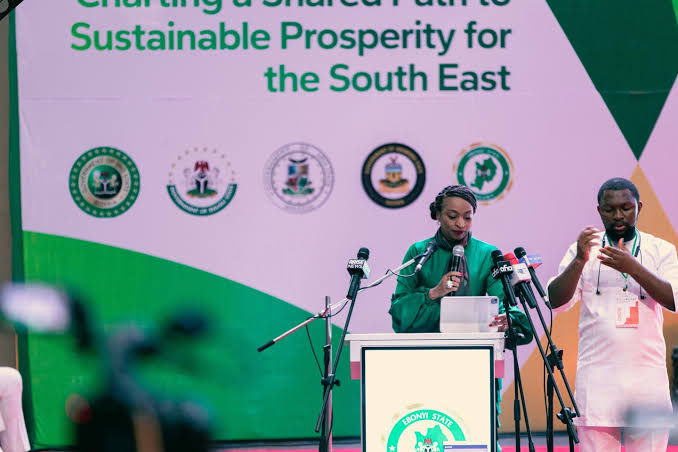
There is no such thing as a “South East Common Market” inside Nigeria. What Governor Peter Mbah and his colleagues are proposing is not bold economics – it is conceptual fraud dressed up as regional ambition.
A common market, by every serious economic definition, is an advanced stage of integration between sovereign states. It presupposes borders, tariffs, customs regimes, trade barriers, and immigration controls, which are then deliberately dismantled in favour of the free movement of goods, labour, services, and capital, often under a common external tariff. That is why examples of common markets include the European Single Market, ECOWAS, and CARICOM – to mention just a few. They are arrangements between countries, not between states and provinces within a single country.
The five South East states of Abia, Anambra, Ebonyi, Enugu, and Imo are not countries. They do not control borders. They do not impose tariffs on one another. They do not regulate labour mobility. They do not run customs services. They do not have an independent trade policy.
There are no internal trade barriers to remove, no tariffs to harmonize, no borders to open – because none exist in the first place. To describe routine interstate cooperation inside a federal republic as a “common market” is either economic illiteracy or deliberate deception. And politicians at this level do not make this kind of mistake accidentally.
So the question must be asked plainly: why host a grand regional summit on a false premise? The answer to that question reveals the unspoken Contradiction
To implement anything even remotely resembling a true common market, the South East would first have to exit Nigeria’s constitutional and economic framework. Trade policy, customs, immigration, and monetary rules are exclusive federal powers. The governors cannot lawfully create a customs union, impose a common external tariff, or regulate cross-border labour movement without secession.
Which raises the unavoidable contradiction: If regional economic sovereignty is suddenly acceptable, if Igbo regional integration is suddenly visionary, if collective South East self-determination is suddenly fashionable, why is Mazi Nnamdi Kanu still in prison? Why is the same Abuja that violently suppresses Biafra agitation applauding a “South East Common Market” proposal that, if taken seriously, rests on the same logic of regional autonomy?
You cannot criminalize political self-determination in the morning and celebrate economic self-determination in the afternoon. One of them is a lie. This is why this is not economics. This is politics. Let us be honest: this is not about the South East. It is not about long-term development. It is not about Vision 2050. This is short-term political engineering for 2027.
Corruption does not plan 25 years ahead. It plans to survive the next election cycle. Nigerian politicians do not think in generations; they think in four-year chunks. Their record proves this relentlessly. What is being packaged as a “regional economic vision” is, in reality, a political laundering operation – a way to rebrand deeply unpopular power alignments, smuggle APC legitimacy into Igbo land, and neutralize Igbo resistance by cloaking collaboration in the language of development. This is not a vision. This is a vicious agenda.
Ndi Igbo must understand the danger here. They must understand the danger of elite deception. When failed politicians who presided over insecurity, youth unemployment, and mass emigration suddenly discover “regional integration,” skepticism is not cynicism – it is survival. The same political class that has normalized federal exclusion of Ndi Igbo, failed to defend Igbo lives and property, and made peace with systemic marginalization, cannot be trusted to chart the destiny of the Igbo people for the next 25 years. A people betrayed in the past by elite compromise cannot afford elite fantasies in the present.
Vision 2050 is premature. What we need is Revision 1966. Before Ndi Igbo talk about 2050, we must confront 1966. We must revisit the last 60 years – not sentimentally, but strategically. We must study the patterns of exclusion, violence, broken promises, and elite accommodation that have defined Igbo existence in Nigeria since the collapse of the First Republic.
History is not nostalgia. History is data. Without a Revision 1966, Vision 2050 will remain empty slogans—led by the same political class that has consistently traded Igbo collective interest for personal access to power. Until Ndi Igbo regain historical clarity, we will continue to grope toward the future – blindfolded and misled by politicians who have already chosen their side.
So, here is my final word: You cannot build a future on false economics. You cannot sell vision with fraudulent concepts. And you cannot ask people to trust leaders who speak boldly about “integration” while collaborating in their continued subjugation. Ndi Igbo must reject this charade. There can be no vision in a vicious agenda.