The fourth Republic Nigeria which began in 1999 was constructed to run on democratic principles patterned after the the American system of Presidential democratic government to be driven by a constitution, rule of law and separation of powers as fundamental tenets of Presidential democracy.
However, from the get go in 1999, Nigeria’s 1999 constitution that birthed the fourth Republic was not a people’s constitution but a Military transition constitution that centralised power at the national level with about fifty eight items in the Exclusive Legislative list and wishy washy items in the concurrent Legislative list that consciously whitled down the powers of the subnationals in what is called a Federal system of government.
With the subnationals weakened constitutionally, and absolute power vested at the National level, it is only a matter of time for the presumed democratic system to be manipulated away from substance to subterfuge by any over ambitious and benign political leadership.
The 1999 constitution of Nigeria has two basic provisions that have kept the country permanently divisive and politically retrogressive in ensuring that Nigeria does not move towards integration and unity in diversity but rather detoured to religious anarchy that lays credence to terrorist activities and emergence of disruptive latitudes of non state actors in pursuit of access to be accommodated by power holders that are unwilling to render good governance but take full control of access to power.
The two disturbing provisions in the 1999 constitution that have kept Nigeria adept in recurring crises are:
Sharia provisions in the 1999 constitution that wraponises terrorism in Nigeria through the promulgation of Sharia laws by about twelve states in the Northern part of Nigeria since 2001 when the former Governor of Zamfara state, Ahmed Yerima introduced Sharia Law in defiance of the secular status of Nigeria as enshrined in the same 1999 constitution.
The second disturbing provision in the 1999 constitution is the issue of the Electoral Law as prescribed in section 60(3) that allows the transmission of election results to be released through electronic transmission and or manual collation of results before declaration which has always produced disputational outcomes in the direction of vacating the right of Nigerians to elect their leaders through popular franchise rather than recourse to compromised Juducial verdicts that usually vacates the mandate of the electorates in questionable judicial rulings.
The Sharia and Electoral provisions in the 1999 constitution has unsettled governance in Nigeria and thrown the country on path to Totalitarianism or government by a select few politicians with the intent to muscle out opposition through the practice of nepotism, cronyism, ethnicity, and total usurpation of the powers of the Legislature and Judiciary in disregard to the principles of separation and powers and rule of law as guard rails of democratic governance.
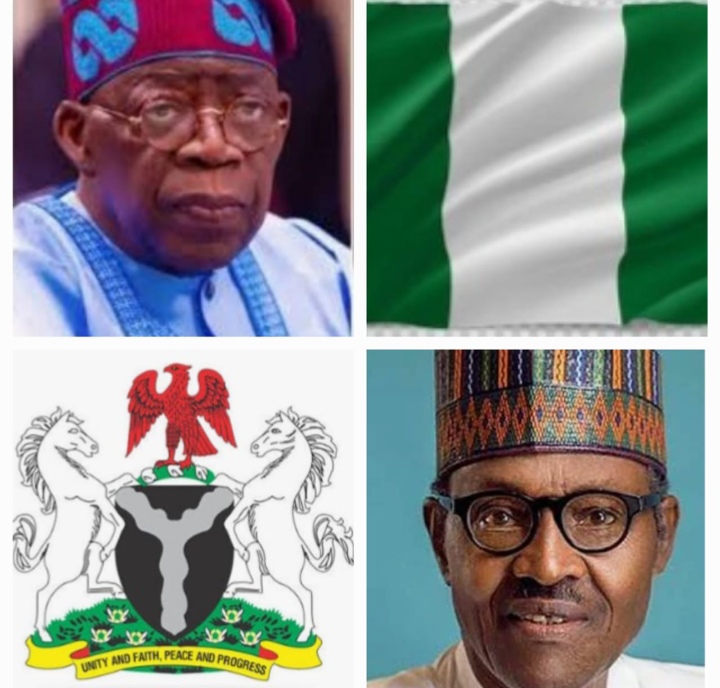
This governance infraction called Totalitarianism became pronounced in Nigeria since the advent of the APC in 2015 when former President Muhammadu Buhari ruled Nigeria disastrously with iron fist and encouraged the festering of absurdities like nepotism and accommodating known terrorist groups and persons in his government with free reign of violence in the form of kidnappings, insurgency, unknown gun men and shadowy military operations like Operation python dance, crocodile smile and emergence of Hisbah Islamic security outfit to exist along side state security apparatuses.
President Buhari’s Totalitarian overtures were buried in nepotism, Islamic irredentism, militarism and opaque financial delusions.
The current administration of President Bola Ahmed Tinubu has deepened Totalitarian system of government in Nigeria through: hijack of the Legislative arm of government, unbridled nepotistic adventurism in governance, transactionary mutation of Law making functions, favouritism in the Judiciary, manhold grip of the security architecture of the country, subtle manipulative tendencies of the entire political space through illogical mass defection of politicians to the ruling APC and an opaque financial governance of economic activities that leaves budgetary planning in chaotic trajectory since 2024 to date.
Nigeria’s transition from democracy to Totalitarianism was as a result of:
Weak and manipulative 1999 constitution.
Very weak and rudderless Legislative leadership.
A terrified and hungry citizenry.
Too much powers vested in the office of the President of Nigeria.
Very weak and compromised justice delivery system.
Very weak and uncoordinated civil society organisations.
Verbose and ambiguous provisions contained in the 1999 constitution that has made it difficult for the same constitution to be amended in past twenty five years.
The Totalitarian grip over Nigeria is defined by:
Emasculation of opposition parties and groups in Nigeria.
Ineffective oversight functions of the Legislative arm of government on the general administration of the country.
Unrestrained approval of loans by the Legislature and failure to demand accountability from the President of Nigeria.
Failure in the implementation of the Federal Character Principles.
Violation of Nigeria’s secular status through the inputation of sharia law in the 1999 constitution.
Betrayal by the National Assembly in enforcing E-Transmission of election results without option of manual collation to strengthen effective and efficient leadership selection process in Nigeria.
Totalitarianism thrives in a system where laws can be abridged, disregarded, misinterpreted, manipulated, misrepresented inorder to satisfy the selfish cravings of a few intent on clinging on to power by hook or crook.
Totalitarian regimes are upheld by coercive structures like:
ICPC.
EFCC.
DSS.
INEC.
The operations of these institutions are to preserve and defend the hench men and key practioners of the Totalitarian state.
It is for this reason that a former Chairman of the APC postulated that: Once you defect to APC as an accused politician, your many sins shall be forgiven you by special arrangement of state orders.
Totalitarianism bends the rule, obstructs justice, and punishes opposition in deterrence to critiques and other opposition forces against the Totalitarian state authority.
Totalitarianism puts it’s actors above the law and the citizens at the mercy of those who wield power in the state.
Totalitarian regimes interpret the laws of the land as against whatever opinions the Judicial may profer.
Totalitarian regimes retain Lawyers that dictate verdicts to the Judicial arm of government and such verdicts are unchallengeable.
In a Totalitarian state, elections are not won by the contestants but by the candidates announced by the INEC under close control of the Totalitarian practioners.
When you see the National Assembly and state legislatures living larger than life, without oversighting the activities of the Executive arm of government, you have a Totalitarian state in your hands.
In a brief speech after signing the 2026 Electoral amendment law, President Bola Ahmed Tinubu said that his government will later look into how to resolve the issue of manual collation of election results.
This obviously is the language of Totalitarian power bearers because the Executive arm of government does not have the Constitutional power to look into or review any law made by the Parliament in a democratic system of government.
Adolf Hitler’s regime of 1930 to 1945, Josep Stalin’s regime of Russia in 1917 and Musolini’s regime in Italy in 1938 to 1945 were types of countries that started with democracy but transformed into Totalitarian regimes by aggregating state power in the hands of a few trusted allies in disregard to the laws of the land.
THE WAY OUT.
With the signing of the 2026 Electoral amendment law, Nigeria is back to the old refrain of:
Defend your votes.
Our votes must count.
We shall resist rigging.
We shall resist ballot snatching.
We shall fight against vote buying.
We shall not allow INEC staff to rewrite the results.
Don’t leave the polling boots until your votes are counted and announced.
We shall defend the results with the last drop of our blood.
The above issues were supposed to be resolved in a clean and transparent amendment of the Electoral Law which Nigeria’s National Assembly failed to do by simple E-Transmission of results without the option of manual collation.
The outcome of the National Assembly recant to do the needful will be the fracas that may attend to post election contentions and disputations arising from the electorates desire to defend their votes.
Nigeria is going to return to another round of amendment of the Electoral Law by 2030 in preparation for the 2031 general elections and the circuit of election amendment continues perpetually.
Since independence in 1960, Nigeria has not conducted an election bereft of contradictions, confrontations and deadly disputations, and this has become an arduous political culture not worthy of emulation.
Nigeria should be restructured quickly to address serious problems like:
Constitutional inconsistencies on Sharia Law and secular status.
Constitutional aberration on ambiguous Electoral provisions.
Nigeria should be restructured to the 1963 Republican state status with Parliamentary system of government having a unicamrral Legislature.
The current Presidential system of government in practice is too expensive for a downtrodden national economy to fund.
Nigeria’s Election budgets have become questionable, unacceptable, unsustainable and incapable of rendering good leadership successive plan without recourse to Judicial interventions.
Nigeria’s screening agencies (ICPC, EFCC, DSS AND INEC) that ought to evaluate background checks of election contestants have never done a good job in exposing personality infractions in credentials of public office seekers.
The members of the tenth (10th) of the Federal Republic of Nigeria performed below expectation in handling important Legislative matters and have willingly railroaded Nigeria’s nascent democracy into a veiled Totalitarian government.
Nigerian electorates are going to vote and defend their votes to ensure that members of this tenth (10th) Parliamentarians are shoved aside with their votes that must be properly counted and declared by INEC.
The 2026 Electoral Act signed by the President into law on the 18th of February, 2026, did not meet the demands of Nigerians for free, transparent and credible elections in 2027.
God help Nigeria.
Steve Nwabuko.
18th February, 2026.