History properly defined is the story of past events, recasted in contemporary times for the purposes of predicting future occurrences.
It is trite knowledge that the ADC coalition movement is largely driven by Elite Northern politicians striving to contest for power and unseat the incumbent President from office in the 2027 general elections under the leadership of Alhaji Atiku Abubakar.
It looks like a direct fight between the North (Hausa/Fulani) led by Atiku Abubakar versus the Yoruba led by current President Bola Ahmed Tinubu.
A similar scenario of what is happening today played out in 1963 elections between the Northern Peoples Congress (NPC) led by Prime Minister Tafawa Balewa and the leader of the Action Group party (AG) led by Chief Obafemi Awolowo.
Sequel to the conduct of the 1963 general elections, the North in an effort to break Chief Awolowo’s strong grip over Western Nigeria, enlisted Chief S.L Akintola a former acolyte of Chief Awolowo to sabotage Awolowo’s influence in the Western region and neutralise his voters vault in a manner as to deny Awolowo landslide victory in the Western region.
Chief S.L Akintola’s Party was recognised by the election umpire and given massive security cover by the Tafawa Balewa Federal Government to outfox Chief Awolowo and bring his political clout in the western region of non effect.
This betrayal of Chief Awolowo by his brother Chief S.L Akintola enabled by the Northern political apparachick spearheaded by Tafawa Balawa was the root cause of the election crises of 1963 in Nigeria in which the coalition party of Tafawa Balewa’s NPC and S.L Akintola’s party were declared the winners of the election and what followed thereafter snowballed into general insecurity in Western Nigeria called Operation weetieee in which Government assets were burnt and several lives lost through arson and chaos.
Following the election crises of 1963, Chief Awolowo was framed up by the Federal Government as planning to overthrow the civilian Government of Tafawa Balewa and he was arrested, tried and imprisoned for life.
This was the foundation of the first military coup in Nigeria in January 1965, as some middle level army officers saw through the impunity, deceit, falsehood, betrayal, conspiracies and subterfuges around which Chief Awolowo was arrested, tried, and convicted to life imprisonment.
The secret plan of the coup plotters was to release Chief Awolowo from prison and install him as the rightful winner of that 1963 general elections which was swindled by Federal might in collaboration with regional internal espionage activities that S.L Akintola represented.
Having gone down memory lane, the events of 1963 is gradually repeating itself in 2026 or some sixty three (63) years afterwards.
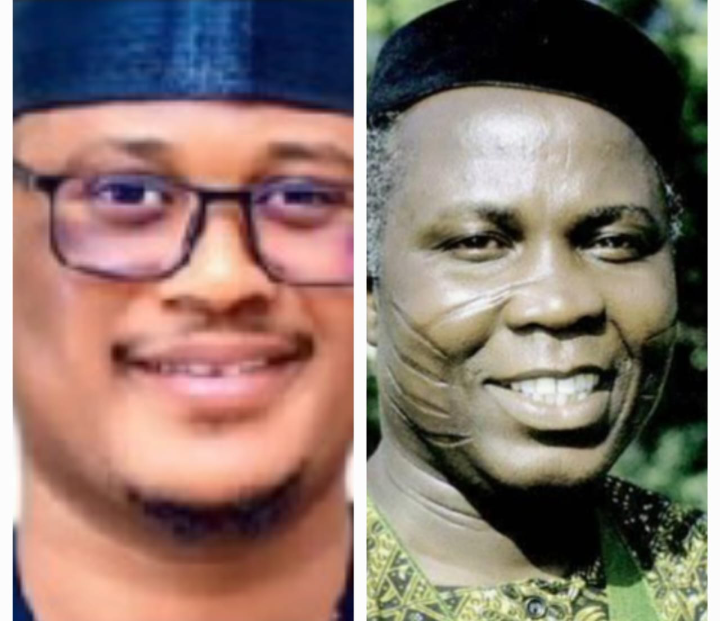
The role S.L Akintola played in 1963 is now being played by Nafiu Bala Gombe in 2026.
The role Tafawa Balewa played in 1963 is now being played by President Bola Tinubu in 2026.
The role the election umpire played in 1963 is now being played by Prof Joash Amupitan’s INEC in 2026.
The role the Northern Nigeria politicians played in 1963 is now being played by Southern Nigeria political stalwarts represented by Senator Godswil Akpabio, Nyesome Wike and President Tinubu in 2026.
The role played by the fraudulent amendment of the 1963 constitution and Electoral Law in 1963 has been played by the tenth (10th) Senate in 2026 by rejecting compulsory real time online electronic transmission of election results and removal of certificate forgery and Narcotics as offences in election litigations in 2026.
From the above historical comparative analysis, it is crystal clear that Nigeria, if not careful, may step into the trap of the type of implosion that attended to the criminal conduct of the 1963 general elections which prepared the ground for the tensions, suspicions, frustrations, and agitations that resulted to military intervention and eventually civil war in 1967.
The criminal way the 1963 general elections was badly managed is at the core of the fall of the first Republic Nigeria and those same signs abound in this fourth Republic Nigeria.
It was Yoruba. Versus North in 1963 as the North held power and now it is still North versus Yoruba in 2026 as Yoruba is holding on to power.
Between Nafiu Bala Gombe (2026) and Samuel Ladoke Akintola (1963) stares another political crises that may disintegrate this entity called Nigeria.
The brewing political implosions in Nigeria that may attend to the 2027 general elections may precipitate the current intractable insecurity in Nigeria into a susceptible civil war which Nigeria’s toddling economy cannot handle.
The North is currently boisterous and baying for revenge of power having not been patronised enough according to them as they claim to be the “owners of Nigeria” and the South is blistering with euphoria of holding the levers of power of incumbency and economic resources allocation which they intend to unleash when the push comes to shove.
Nigeria must be reminded that it is sitting on the edge of a precipice which may collapse into unintended war of attrition that may incinerate the populace against the government which is called a Revolution.
The Elders and peace loving people of Nigeria must rise and speak up now against the gathering storm called 2027 general elections with it’s multifaceted dangerous signposts.
Majority of Nigerians no longer repose confidence in the Legislature and Judiciary having been compromised by the Presidency through several law making infractions and law interpreting distractions.
The stage is now set for history to repeat itself in Nigeria because when the authorities begin to arrest opposition politicians, castrate their political party and dance to swear themselves into power again by decimating opposition, the people’s power may emerge to abrogate injustice in Nigeria.
Revolutions happen spontaneously, simultaneously and contagiously and it is worse than civil war.
A stitch in time, they say, saves nine.
God bless Nigeria.
Steve Nwabuko.