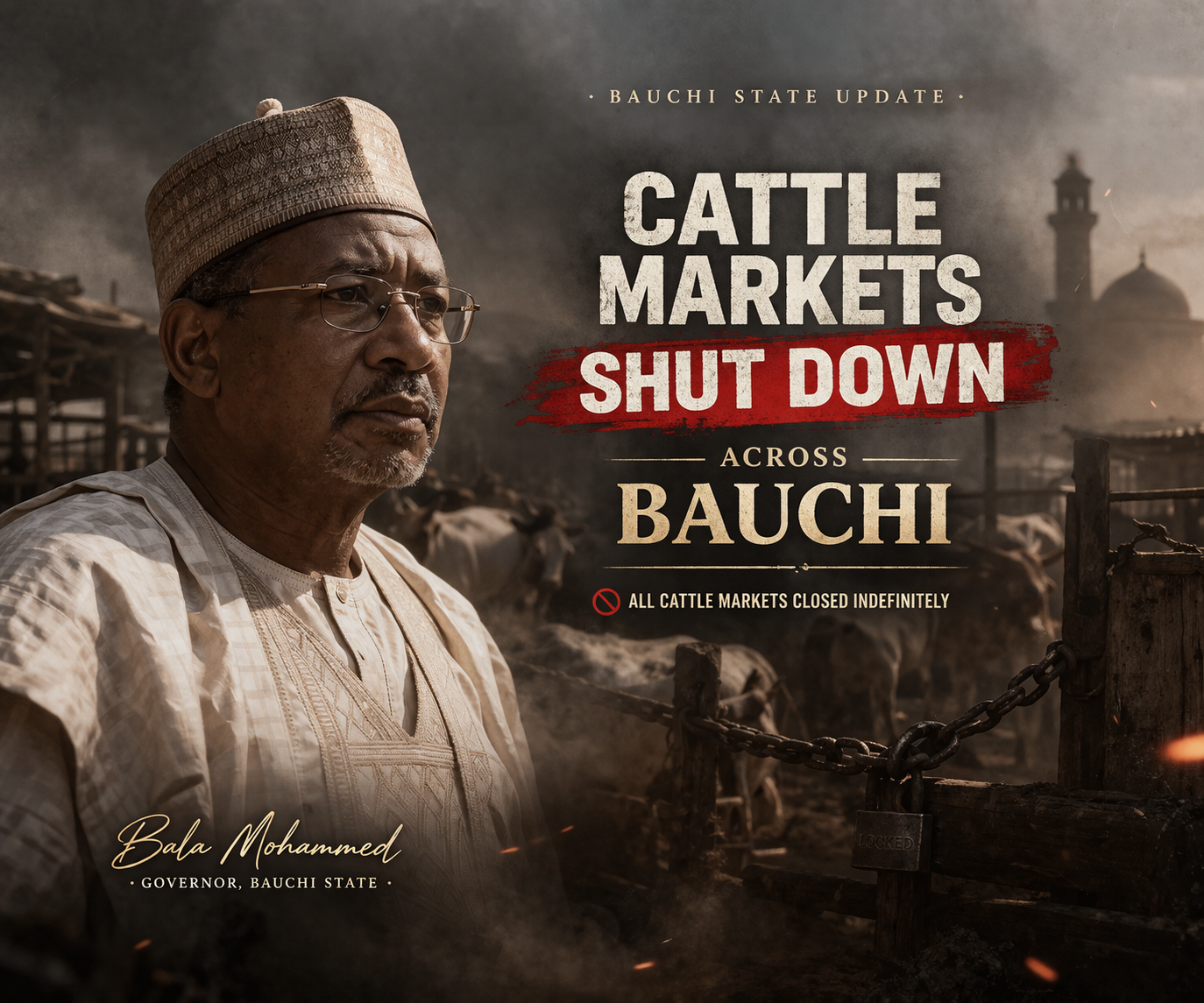
The decision by Bala Mohammed to close 24 cattle markets in Bauchi State is not just an agricultural or commercial policy, it is a calculated security strategy aimed at disrupting the economic backbone of banditry.
Across parts of northern Nigeria, cattle markets have evolved beyond simple trading hubs. In many cases, they’ve become part of an informal “shadow economy” where:
a. Stolen livestock are quickly resold, making tracing nearly impossible
b. Cash-based transactions which allow anonymity.
c. Armed groups who exploit the system to launder money and sustain operations
By shutting these markets, the state is essentially trying to break the supply chain of banditry cutting off how criminals and kidnappers convert stolen cattle into cash and weapons.
Why This Matters
Banditry in northern Nigeria is not just about violence, it’s an economic system Groups involved rely on: Cattle rustling, Kidnapping for ransom, Illegal arms trade
Cattle markets sit at the intersection of these activities. If the markets are compromised, the entire ecosystem becomes harder to sustain.
Potential Gains
If effectively implemented, the policy could: Reduce cattle rustling by eliminating easy resale points, Disrupt cash flow to criminal networks, Force transactions into more regulated channels, Improve traceability of livestock trade
It’s a move similar to cutting off black-market fuel supplies in conflict zones you weaken the engine, not just chase the drivers.
But There Are Risks involved
This kind of sweeping shutdown comes with serious disadvantages:
1. Economic Shock to Legitimate Traders: Thousands of law-abiding herders and traders depend on these markets for survival. Closing them abruptly can: Collapse local incomes, Increase unemployment, Create resentment toward government
2. Displacement Effect: Criminal networks are adaptive. Instead of stopping, they may: Move operations to neighboring states, Shift to underground or mobile markets, Use cross-border routes
3. Trust Deficit: Without clear alternatives, citizens may see the policy as punishment rather than protection.
The Bigger Question: “If we can’t secure the marketplace, can we ever truly hope to master the market?” this hits at the core issue. Security and economics are intertwined. a dysfunctional market, Rewards illegality, Punishes compliance and Undermine state authority. But shutting markets is only a first step, not a complete solution. What Needs to Follow
For this policy to succeed, it must be paired with:
a. Structured, monitored markets with registration and livestock tracking..
b. Digital or traceable payment systems, to reduce anonymous cash deals.
c. Regional coordination with neighboring states to prevent spillover.
d. Security presence in reopened or alternative markets, closing down their established trading routes will sure slow them down, but neighboring markets must be monitored.
e. Support for affected traders. (grants, seamless relocation strategy for legal and registered traders, formalization)
Bottom Line
Governor Bala Mohammed’s move is bold and risky. It acknowledges a hard truth: you cannot defeat insecurity without dismantling the economy that feeds it.
But success will depend on what comes next, If the shutdown is not followed by intensive reforms such as proper documentation of traders, and systems that document and monitor their daily transactions, the shadow economy won’t disappear it will simply go deeper underground.