By Vitus Ozoke
There is something uniquely humbling about watching a global figure trace a route across your continent with all the precision of a surgeon – only to discover your country has been neatly excised from the operation.
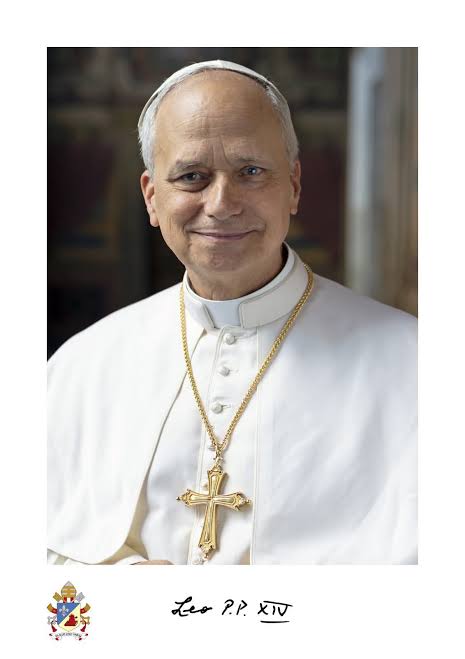
The Pope is visiting Africa. That much is clear. Cameroun? Yes. Angola? Certainly. Nigeria? Well… apparently, we are being spiritually waved at from 30,000 feet.
Now, one might assume this is a simple case of logistics gone rogue. After all, Cameroun and Nigeria are not just neighbors – they are practically siblings separated by a colonial squabble and a shared love for pepper soup. The roads may be questionable, but the proximity is undeniable. You could, in theory, sneeze in Cameroun and get a “bless you” from Calabar.
So why the curious detour? Why leapfrog over the so-called “Giant of Africa” as though it were an inconvenient pothole on the road to holiness? Ah, but perhaps the answer is less about geography and more about optics.
Nigeria, for all its vibrancy, is a paradox wrapped in headlines. It is a nation where faith is abundant but infrastructure is… aspirational. A place where churches overflow on Sundays, yet the roads leading to them test one’s faith before the sermon even begins. If holiness were measured in decibels of worship alone, Nigeria would be Vatican II. But the global gaze tends to linger not on our hymns, but on our headlines.
And what do those headlines say? They speak of instability, of tensions both old and newly reinvented, of a system that often appears to run on divine hope rather than functional design. Hosting a figure of such global stature requires more than faith – it demands predictability, security, and a certain level of national coherence. Not perfection, but at least the illusion of it.
So perhaps the Pope’s itinerary is not a snub, but a statement. Not an indictment, but an observation. Because here’s the uncomfortable truth: Nigeria doesn’t lack importance. It lacks ease. Ease of movement. Ease of governance. Ease of narrative.
A papal visit is not just a spiritual exercise; it is a logistical ballet. Every step choreographed, every risk minimized. And Nigeria, for all its greatness, has become a place where unpredictability is the only reliable constant. You don’t just “swing by” Nigeria. You prepare, you negotiate, you pray – possibly in that order. Still, the symbolism stings.
To be the country with one of the largest Catholic populations in Africa and yet remain absent from the Pope’s travel plans feels like being the loudest voice in the choir that somehow didn’t make the performance list. It raises questions – not just about how we are seen, but about what we have become.
Do we want to believe this is merely an oversight? A cartographic accident? Or do we confront the more sobering possibility that the world engages with us cautiously, even when the intentions are holy?
Satire aside, this moment offers a mirror. Not a flattering one, perhaps, but a necessary one. Because while it’s easy to question the Pope’s route, it’s harder – and more useful – to question the conditions that made that route seem reasonable.
In the end, maybe the real issue isn’t why the Pope didn’t come. It’s whether, if he did, we would have been ready to receive him – not just with songs and crowds, but with a nation that works well enough to host more than just hope. Until then, we remain what we have long been: impossible to ignore, yet somehow easy to bypass.